 |
|
HOME TURTLE DEGUS RAT DOG HEN HUMANS 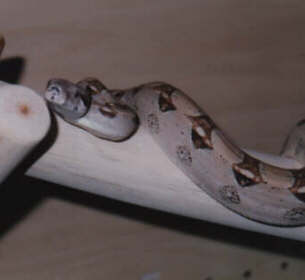 --> PICTURES
CLASSIFICATION
phyllum : chordata class : reptilia order : squamata family : boidae sub-species : boa constrictor imperator (colombian boa) NATURAL HISTORY origin : snakes appeared 120 million years ago. the census of snakes is about 2600 species. geographic distribution : from Mexico to Equator. habitat : tropical forests. juridic statute : CITES appendix II BIOLOGY adult size : about 2,40 m (8ft) ; females grow larger than males. sexual maturity : about 3-4 years. breeding : males at 4 years old / females at 6' gestation : about 4 months litter : 10 to 40 live young. shed : once a month for young boas average of 6 times a year for adults. longevity : 25 years. boas are nocturnal/crepuscular and moderated arboreal. senses Jacobson organ : + + + (chemical stimuli are catched by the tongue and transported in the buccal cavity to the Jacobson organ which send the informations to the brain ; this fonction is used in recognizing, attack, prey tracking, sexual behavior...). smell : + + hearing : - (snakes don't hear sounds but are receptive to mechanical shaking) FEEDING rodents : prekilled rodents avoid the risk for the snake (attacks and wounds). 1-2 mices every 5-7 days for young boas (until 1 year old) 1-2 rats every 7-10 days over 1 year old 1-3 rats every 10-20 days over 2 years old (replaced by guinea pigs or rabbits for the big snakes) HOUSING housing until 2 years old : 90L x 50W x 50H cm (35"L x 20"W x 20"H) >2 years old : 120L x 60W x 60H cm (47"L x 24"W x 24"H) big specimens : 200L x 60W x 60H cm (78"L x 24"W x 24"H) heating snakes need a fresh and a heat zone. beware the animal will never get into direct contact with the heating source. day : 26-28°C / 79-82°F (fresh zone) 32-35°C / 90-95°F (heat zone) night : 25-28°C / 77-82°F water the water bowl has to be large enough to keep a good humidity rate and has to be scrubbed every 3 days. substrate newspaper, Astroturf, beech chips. do not use soil, sand, plants (bacterial proliferation), pine and cedar shavings (poisonous oils). the substrate has to be cleaned and for Astroturf disinfected with household bleach (rinse thoroughly and dry completely) as soon as it's soiled. the enclosure has to be cleaned and disinfected (household bleach or 70° alcohol) every 4-6 weeks. light day/night alternation : 12/12 hours beware : U.V. rays are dangerous for the snakes eyes (conjunctivitis) other setups the snake needs one or 2 hiding places (ex : 1 in each zone) : a cardboard box or synthetic plants can be used. a solid branch can be placed in the enclosure (many boas - especially young boas - like to stay on branches). DISEASES ectoparasites the most frequent mites are ophionyssus natricis they are small, dark-red or black, can be seen on the snake's body and in the water bowl. symptoms : anorexia, excessive soaking, excited or aggressive snake. gastro-enteritis symptoms : vomiting, abnormal defecation, diarrhea, weight loss, anorexia. causes : endoparasites, bacteria (Salmonella, Aeromonas). gum infection (stomatitis) symptoms : apathy, anorexia, open mouth, pus, excessive salivation. causes : wound, stress, vitamin C deficiency, substrate ingestion. respiratory diseases usually in imported animals. symptoms : respiratory problems, buccal and nasal secretions, anorexia. causes : viral, parasitical or bacterial infection. cutaneous infection, mycosis symptoms : little white vesicles under the scales, seep cutaneous zone, brown and wrinkled ventral scales, loss of ventral scales, excrescences. cause : wrong hygiene (humid substrate) constipation causes : too low humidity rate, too low heating, obstruction by prey's fur. shed problems causes : weakness, disease, too low humidity rate. star-gazing it's not a disease but a symptom : the head and the 1st third of the snake is up ; this behavior, if prolonged and frequent, shows a central nervous system affection (bacterial or viral infection, tumor, intoxication, traumatism, encephalitis) salmonella symptoms : none, sometimes diarrhea, anorexia, apathy. a lot of reptiles are carriers of salmonella and this disease can be very serious for humans. -> always wash your hands after handling reptiles, never let children or pregnant women handle reptiles, never scrub the water bowl or substrate in the kitchen sink. LINKS boa constrictor : http://www.anapsid.org/boa.html reptile care info (NERD) : http://www.newenglandreptile.com/care.html salmonellosis : http://www.anapsid.org/aasalmonella.html mites http://www.anapsid.org/mites.html behavior and diseases in reptiles : http://www.anapsid.org/mainhealthbehave.html#Reptile%20Health |